
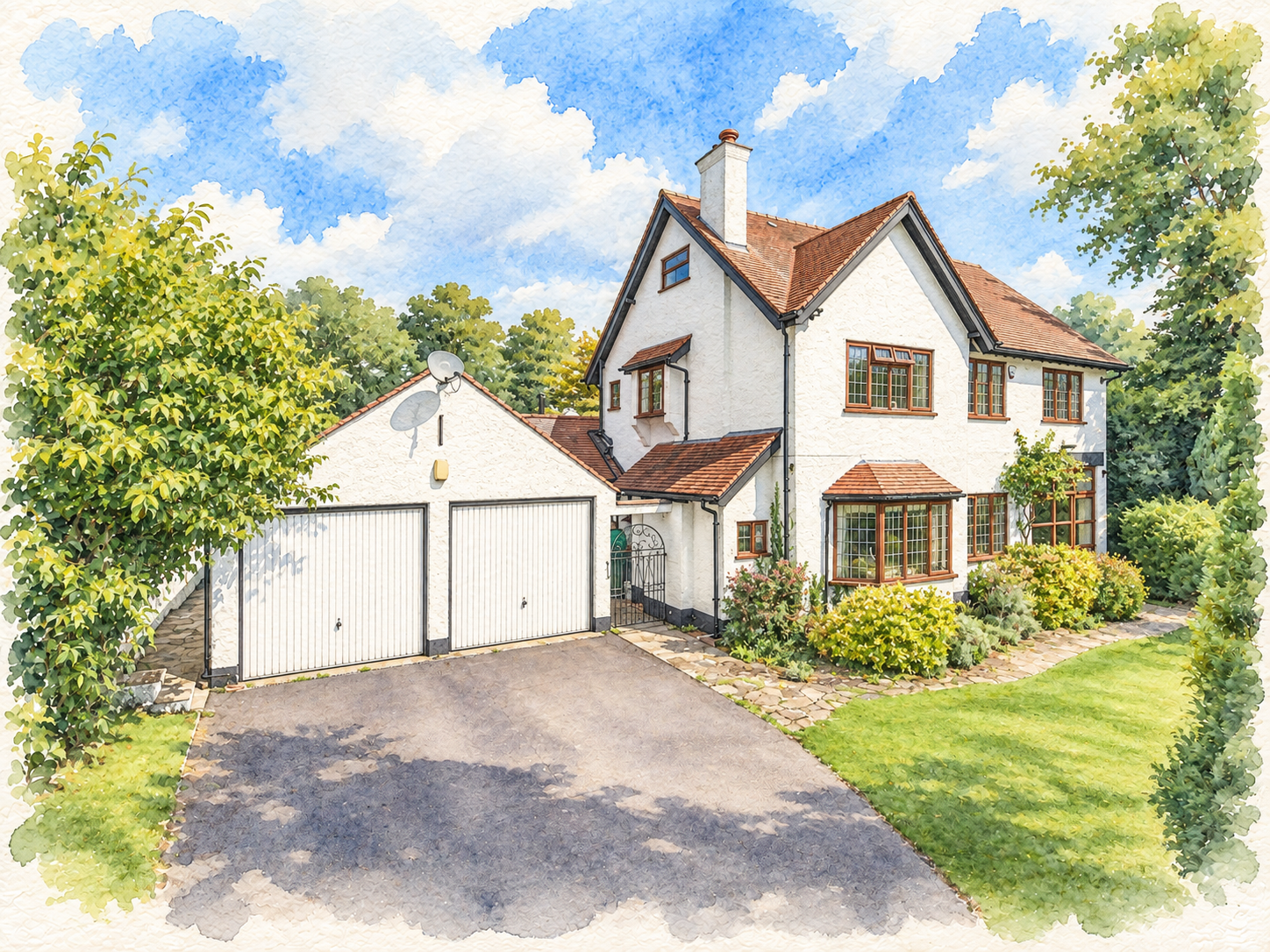
Living in Wallington
Wallington is a well-established south London suburb offering an attractive combination of family housing, excellent schools, green spaces and convenient transport links into Central London.
Part of the London Borough of Sutton, Wallington sits between Carshalton and Croydon and covers a surprisingly varied housing market. Buyers can find everything from Victorian and Edwardian homes to 1930s family houses, traditional terraces, purpose-built apartments and more modern developments.
There is also a considerable difference between individual parts of Wallington. The roads surrounding the station and town centre provide convenience and easy access to transport, while South Wallington is characterised by established residential streets and larger family homes. To the north, buyers benefit from easy access to Beddington Park and connections towards Croydon.
For people moving into the area for the first time, understanding these individual pockets can be just as important as deciding that Wallington itself is the right location.
Established in 1985, Paul Graham remains a family-run and truly independent estate agent, combining modern property marketing with traditional estate agency methods and personal service.
Is Wallington a good place to live?
Wallington appeals to a broad range of buyers, from first-time purchasers and commuters to growing families and people downsizing locally.
Its transport links are a major attraction. Wallington railway station sits close to the town centre, with direct services towards London Victoria and London Bridge. Southern currently shows typical journeys to London Victoria of around 39–43 minutes, although journey times and services should always be checked for the particular time of travel.
Wallington also benefits from a substantial amount of green space. The 58-hectare Beddington Park is one of the largest and most popular open spaces locally, while the wider area provides parks, sports facilities and established residential streets.
Schools are another major reason families consider the area. Wallington itself is home to Wilson’s School, Wallington County Grammar School and Wallington High School for Girls, giving the town an unusually strong concentration of highly regarded selective secondary schools.
Wilson’s in particular consistently ranks among the highest-performing state schools in the country. The Sunday Times Parent Power tables recently placed Wilson’s as the third best state secondary school nationally, based on academic performance.
Add a traditional town centre, local shops and easy access to Sutton, Carshalton and Croydon and it is easy to understand why Wallington remains a popular place to buy a home.
The different areas of Wallington
Wallington town centre and station
The heart of Wallington centres around Woodcote Road, Wallington Square and the railway station.
This is one of the most convenient parts of the area for commuters, with shops and everyday amenities close by and the station within easy walking distance from many surrounding roads.
Housing close to the centre includes a significant number of apartments and maisonettes alongside Victorian and Edwardian houses, terraces and later homes.
For buyers who want to be able to walk to the station and shops, this area is often one of the first places they consider.
South Wallington and Woodcote
South Wallington has a noticeably different character.
Moving south of the town centre towards Woodcote, the housing becomes increasingly residential, with established roads and a good selection of substantial family houses.
Wallington's development history is reflected in its housing. Sutton Council's local character appraisal describes South Wallington as having significant Edwardian and inter-war development, with many established detached and semi-detached homes.
Today there is a mixture of Edwardian, inter-war and later family housing, including some particularly spacious homes on generous plots.
Buyers looking in South Wallington are often prioritising space, road, schools, garden and parking rather than simply being as close as possible to the station.
Wallington Green and North Wallington
North of the railway line, Wallington extends towards Wallington Green, Beddington and the Croydon boundary.
There is a good mixture of Victorian property, traditional terraces, semi-detached family houses and later developments.
Wallington's expansion was closely connected to the arrival of the railway in the 19th century. The station opened in 1847 and was originally called Carshalton before being renamed Wallington in 1868. Housing development subsequently expanded around the railway, including Victorian villas north of the station.
Today, one of the attractions of this side of Wallington is its access to Beddington Park, as well as transport links towards Croydon and the surrounding areas.
Depending on the individual road, buyers can also sometimes achieve more accommodation for their budget than in some of the most sought-after roads of South Wallington.
Beddington
Immediately to the north and east of Wallington is Beddington, an historic area closely connected with Wallington and forming part of the wider local housing market.
One of its major attractions is Beddington Park, through which the River Wandle runs.
The park covers approximately 58 hectares and includes woodland, wildlife areas, formal gardens, a lake and children's play facilities. Its history stretches back centuries; the area was once a medieval deer park associated with the Carew family.
For property buyers, Beddington provides another mixture of traditional family homes, terraces, apartments and later housing while remaining within easy reach of Wallington.
The wider SM6 area
The SM6 postcode stretches beyond what many residents would consider central Wallington and includes a range of different housing estates and neighbourhoods.
That makes it particularly important not to judge a property purely from the postcode.
Two houses advertised as being in SM6 may have very different surroundings, school options, station distances, styles of housing and values.
It is one of the reasons genuine local comparable evidence becomes so important when either buying or valuing a property in Wallington.
What types of property are there in Wallington?
One of Wallington's strengths is the variety of homes available.
Period-property buyers can find Victorian and Edwardian houses, with some especially attractive examples in South Wallington and around older residential roads.
There is also a substantial amount of inter-war housing, including the type of 1930s semi-detached family home that remains consistently popular with buyers looking for driveways, gardens and potential to extend.
Traditional terraces provide another important part of the market and can offer an accessible route into freehold home ownership.
Wallington also has a large apartment market, ranging from converted period properties to purpose-built blocks and more modern developments.
Bedroom count alone rarely tells the complete story. Plot size, road, condition, floor area, parking, proximity to the station, garden orientation and potential to extend can all materially affect buyer demand and value.
How much does property cost in Wallington?
Property values vary significantly depending upon the exact location and type of home.
Rightmove's latest sold-price information shows an overall average sale price in Wallington of approximately £453,000 over the preceding year. Flats averaged approximately £276,000, terraced properties around £471,000, while semi-detached properties averaged approximately £609,000. Rightmove does not give a detached-house average in that summary; Zoopla separately reports an average of approximately £776,000 for detached homes in Wallington over the last 12 months.
These averages are useful for understanding the broad market, but they should not be mistaken for an individual property valuation.
A large Edwardian family house in South Wallington, a flat close to the station and a three-bedroom terrace elsewhere in SM6 are completely different markets.
When valuing a home, we therefore look closely at genuinely comparable properties that have sold and agreed nearby, along with the property's condition, accommodation, plot and current buyer demand.
The same principle is useful for buyers. Asking prices show what properties are being marketed at; completed sales provide evidence of what buyers have actually paid.
Commuting from Wallington
Wallington railway station is one of the area's major advantages.
The station is located on Railway Approach close to the town centre and is managed by Southern.
Direct services are available towards London Victoria and London Bridge, along with connections to destinations including West Croydon and Epsom. Southern currently gives typical Wallington-to-London Victoria journeys at approximately 39–43 minutes.
For commuters looking at property in Wallington, however, we would recommend considering the whole journey, not simply the train time.
Walk from the property to the station. Try the journey during the period you would normally travel. Consider whether you would realistically walk, cycle, drive or use a bus.
A house that appears only slightly further from the station on a map can feel very different when making that journey every morning.
Parks and green spaces
Wallington and the surrounding area provide some excellent opportunities for outdoor space.
The standout is Beddington Park, covering approximately 58 hectares to the north of Wallington.
The River Wandle runs through the park before reaching the lake in the Grange Garden, while the park contains woodland walks, wildlife areas, formal gardens, a children's playground and space for recreation.
Its scale makes it an important attraction for families, dog walkers, runners and people wanting accessible green space without leaving the local area.
Wallington's established residential character also means many parts of the area feel considerably greener than their distance from Central London might suggest.
A little Wallington history
Modern Wallington developed largely after the arrival of the railway.
In the early 19th century it was a small hamlet within Beddington Parish. Wallington station arrived in 1847 — originally under the name Carshalton — and was renamed Wallington in 1868.
Housing development followed the railway, initially including Victorian villas north of the station and later extending southwards. During the early 20th century, substantial residential development took place around what is now South Wallington.
That development history explains much of the housing seen today: Victorian property around some of the older parts of Wallington, Edwardian homes and extensive inter-war development beyond it.
It is also why neighbouring roads can sometimes contain noticeably different styles and sizes of home.
Schools in Wallington
Education is one of the major reasons many families consider Wallington.
The area sits within the London Borough of Sutton, which is particularly well known for its selective secondary schools, and Wallington itself is home to some of the strongest-performing state schools in the country.
Wilson's School, on Mollison Drive in Wallington, is a selective state school for boys and consistently achieves exceptional examination results. In 2026, 66.4% of GCSE grades achieved were Grade 9 and 96.2% were Grades 9–7. At A level, 79.4% of grades were A or A*.
The Sunday Times Parent Power tables have also placed Wilson's as the third best state secondary school in the country based on recent academic performance.
Wallington is also home to Wallington County Grammar School and Wallington High School for Girls, giving the area an unusually strong concentration of selective secondary education.
The wider borough's selective schools also include Sutton Grammar School and Nonsuch High School for Girls. Sutton Council currently lists all five as the borough's selective secondary schools.
Admission to these schools is based on selective testing and each school's individual admission criteria rather than simply living close to the school. Families considering a move for educational reasons should therefore always check the latest admissions requirements directly with the schools and Sutton Council.
There are also numerous primary and non-selective secondary schools serving Wallington and the surrounding area.
School admission policies, performance information and allocation criteria can change, so parents should always make their own enquiries before purchasing a property on the basis of a particular school.
Buying a home in Wallington
Our biggest piece of advice is to look beyond the postcode and understand the individual road.
Start by deciding what matters most.
A commuter may prioritise being within ten minutes' walk of Wallington station. A growing family might prefer South Wallington and prioritise a larger garden, driveway and additional reception space. A first-time buyer might achieve considerably more by looking slightly further from the centre.
Once you have narrowed down the right area, compare genuinely similar homes.
When viewing, look beyond décor. Think about room proportions, storage, parking, condition, garden direction, roof and windows and whether the property will still meet your needs several years from now.
If you are buying a flat, establish the lease length, service charge, ground-rent arrangements, management arrangements and whether any significant works are planned for the building.
And don't be afraid to ask why somebody is selling, whether previous offers have been received and what position the seller is in.
The purchase price matters, but so does understanding exactly what you are buying.
Selling a property in Wallington
Good estate agency begins with understanding who is likely to buy your particular home and what they will compare it with.
A family home in South Wallington should not necessarily be marketed in the same way as a station apartment or a traditional terrace in North Wallington.
The first decision is pricing.
We believe a valuation should be supported by evidence rather than simply choosing the highest figure suggested by an estate agent. Recent comparable sales, competing properties, current buyer demand and the individual strengths of the home all need to be considered.
Once the property reaches the market, professional photography, a strong description, floorplan and exposure across the major property portals are important — but they are only part of the job.
At Paul Graham we continue to believe strongly in traditional estate agency alongside modern marketing.
That means speaking directly to registered buyers, proactively matching applicants to properties, following up enquiries and viewings and communicating properly with our sellers by telephone and email rather than expecting clients to monitor an app for an update.
When offers arrive, the highest figure is not always automatically the strongest offer. A buyer's financial position, chain, timescale and ability to proceed all matter and should form part of the negotiation.
And our involvement does not end when the board changes to Sold STC.
Paul Graham has dedicated sales progressors who remain involved throughout the transaction, communicating with sellers, buyers, solicitors and other estate agents within the chain and helping to progress the sale towards exchange and completion.
Why local knowledge matters
Property portals provide an enormous amount of useful information, but data alone cannot explain every difference in value.
An estate agent needs to understand why buyers may pay more for one road than another nearby; which styles of property attract the strongest demand; how important station distance is at a particular price point; what buyers looking in South Wallington are comparing against; and which sold property is actually a valid comparable.
That knowledge comes from repeatedly valuing, marketing, negotiating and selling property within the same local market.
Paul Graham's Wallington office has particularly strong recent evidence of that activity.
Our Wallington office is located at 3 Wallington Square, Woodcote Road, Wallington, SM6 8RG, in the heart of the area we serve.
Frequently asked questions about living in Wallington
Is Wallington in London or Surrey?
Wallington forms part of the London Borough of Sutton and is therefore within Greater London. Surrey is still commonly used within local postal addresses.
Does Wallington have a train station?
Yes. Wallington has its own railway station close to the town centre and the station is managed by Southern. Direct services include routes towards London Victoria and London Bridge.
How long does the train from Wallington to London take?
Journey times vary according to the service and destination. Southern currently shows typical Wallington to London Victoria journeys of approximately 39–43 minutes. Always check current timetables for the particular service you intend to use.
What is South Wallington like?
South Wallington is predominantly residential and contains a particularly good selection of established family homes, including Edwardian and inter-war property.
Many buyers searching here are looking for larger houses, gardens, driveways and attractive residential roads while remaining within reach of Wallington town centre and station.
Are there grammar schools in Wallington?
Yes. Wallington is home to Wilson's School, Wallington County Grammar School and Wallington High School for Girls.
Wilson's regularly ranks among the country's highest-performing state secondary schools and was recently placed third nationally in the Sunday Times Parent Power state secondary school rankings.
Admission to the selective schools depends on entrance testing and individual admission criteria rather than simply living nearby.
Is there much green space in Wallington?
Yes. One of the largest nearby spaces is Beddington Park, which covers approximately 58 hectares and contains woodland, gardens, a lake, play facilities and the River Wandle.
What types of property can I buy in Wallington?
Wallington offers a broad mix including Victorian and Edwardian houses, 1930s family homes, terraces, detached and semi-detached houses, maisonettes, purpose-built flats and more modern developments.
How do I find out what my Wallington property is worth?
Online estimates and postcode averages can provide a broad indication, but an accurate valuation requires closer comparison with similar properties.
Road, size, condition, plot, parking, proximity to Wallington station and recent comparable sales can all affect value. A local market appraisal allows those factors to be considered properly.
Thinking of moving in Wallington?
Whether you're considering selling a property in Wallington and surrounding areas or beginning your search for a home in the area, our local team would be happy to help.
Paul Graham Estate Agents – Wallington
3 Wallington Square,
Woodcote Road,
Wallington,
Surrey, SM5 3AG
020 8669 5201


